
Freestyle Swimming for Beginners: How to Swim Faster With Less Effort
Freestyle also known as the front crawl is the most popular and widely taught swimming stroke in the world. It’s fast, efficient, and versatile. But for beginners, freestyle can feel surprisingly hard. Many new swimmers struggle with breathing, fatigue, or coordination and wonder why something that looks smooth and effortless feels so exhausting.
The truth is this: freestyle swimming isn’t about strength — it’s about technique. When done correctly, freestyle allows swimmers to move faster while using less energy. This guide breaks down how beginners can learn freestyle the right way, focusing on efficiency, comfort, and confidence rather than speed alone.


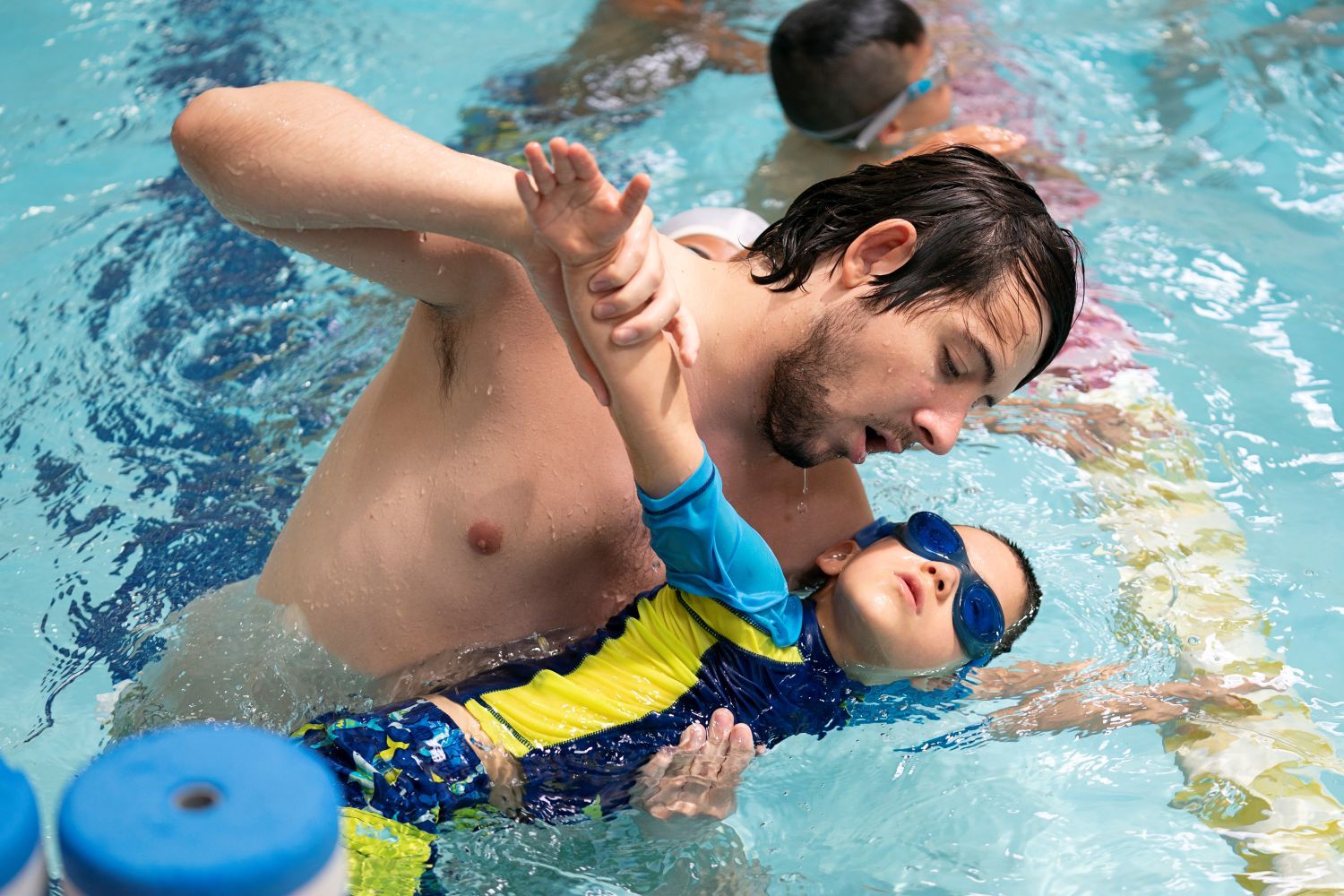
🌊 Why Freestyle Feels Hard at First
Most beginners make the same mistakes:
- Kicking too hard
- Holding their breath
- Lifting the head to breathe
- Overusing the arms
- Fighting the water instead of flowing with it
These habits cause tension, disrupt balance, and drain energy quickly. Learning freestyle properly means teaching your body to relax, rotate, and move efficiently through the water.
🧠 The Key to Swimming Faster: Efficiency, Not Power
Fast swimmers aren’t muscling their way through the pool. They’re gliding.
Freestyle speed comes from:
- Streamlined body position
- Balanced rotation
- Controlled breathing
- Relaxed, continuous movement
Once beginners understand this, freestyle becomes dramatically easier.
Body Position: The Foundation of Freestyle
The most important part of freestyle is body position. Your body should be long, flat, and horizontal almost like you’re floating downhill.
Focus on:
- Head looking straight down (not forward)
- Hips close to the surface
- Core gently engaged
- Body stretched from fingertips to toes
When your body is aligned, the water supports you instead of resisting you.
🔄 Rotation: Swim Side to Side, Not Flat
Freestyle isn’t a flat stroke. Your body should rotate slightly from side to side with each arm stroke. This rotation:
- Reduces strain on shoulders
- Makes breathing easier
- Increases stroke length
- Improves efficiency
Beginners often try to keep their shoulders square this actually makes swimming harder. Let your body roll naturally with each stroke.
💨 Breathing Without Panic
Breathing is where most beginners struggle and where the biggest gains happen.
Common beginner mistakes:
- Holding breath underwater
- Lifting the head to breathe
- Breathing too late
Instead:
- Exhale slowly underwater through nose or mouth
- Turn head gently to the side to breathe
- Keep one goggle in the water when breathing
- Inhale quickly, then return face to the water
Think of breathing as part of the rhythm, not a break from swimming.
✋ Arm Technique: Long and Relaxed
Your arms do most of the forward movement, but not through force through reach and timing.
Freestyle arm basics:
- Enter the water softly in front of your shoulder
- Reach forward, extending your body
- Pull back using forearm and hand
- Recover relaxed over the water
Avoid short, choppy strokes. Long strokes = fewer strokes = less effort.
🦵 Kicking: Less Is More
One of the biggest myths in freestyle is that kicking should be powerful. In reality, excessive kicking is a major reason beginners get tired quickly.
Beginner kick tips:
- Kick lightly and continuously
- Keep legs long and relaxed
- Kick from the hips, not the knees
- Small splashes = good technique
Your kick helps with balance and rhythm — not speed.
🧩 Putting It All Together
When freestyle clicks, it feels smooth and almost effortless. Beginners often notice:
- They can swim longer without stopping
- Breathing becomes calmer
- Arms feel less tired
- Movement feels rhythmic instead of chaotic
This doesn’t happen overnight, but it does happen faster with proper instruction.
🧑🏫 Why Coaching Makes a Huge Difference
Freestyle is difficult to self-correct. Small adjustments like head angle, arm entry, or breathing timing can completely change how the stroke feels.
That’s why structured swim lessons help beginners improve much faster than solo practice. A trained instructor can:
- Spot inefficiencies instantly
- Correct bad habits early
- Teach drills that build muscle memory
- Help swimmers progress safely and confidently
🏁 Final Thoughts: Swim Smarter, Not Harder
Freestyle swimming doesn’t have to feel exhausting. With the right technique, beginners can swim faster, longer, and with far less effort than they ever imagined.
Focus on:
- Body position
- Rotation
- Relaxed breathing
- Smooth, continuous movement
Speed will follow naturally.
Whether you’re learning to swim for the first time or rebuilding your technique, freestyle is a skill worth mastering not through force, but through understanding.
People also ask:
1️⃣ Why do beginners get tired so quickly when swimming freestyle?
Most beginners tire quickly because they tense their muscles, kick too hard, or hold their breath. Poor body position and inefficient breathing cause the body to fight the water instead of moving smoothly through it.
2️⃣ Is freestyle harder to learn than other swimming strokes?
Freestyle can feel harder at first because it requires coordination between arms, legs, breathing, and body rotation. Once the basic rhythm is learned, many swimmers find freestyle becomes the easiest and most efficient stroke.
3️⃣ How often should beginners practice freestyle to improve?
Practicing freestyle one to two times per week is usually enough for beginners to see steady improvement. Consistent short sessions are more effective than infrequent long workouts.
4️⃣ Should beginners use swim aids like kickboards or fins?
Swim aids can be helpful when used correctly. Kickboards can improve body position awareness, while fins can help beginners feel forward momentum. They should support learning, not replace proper technique.
5️⃣ How long does it take to feel comfortable swimming freestyle?
This varies by swimmer, but many beginners start feeling more comfortable after a few weeks of consistent practice or structured lessons. Small improvements in breathing and balance often make the biggest difference early on.
Categories:
Latest posts:
- Freestyle Swimming for Beginners: How to Swim Faster With Less Effort
- Chlorine and Kids: How Pool Water Affects Skin, Hair, and Eyes (And What Parents Can Do)
- Two Pools, One Swim School: How Separate Baby & Kids Pools Improve Learning in Midtown Toronto
- Top 7 Signs Your Baby Is Ready for Swim Lessons
- Swimming for Tots: A Parent’s Guide to Ages 1–4 in the Pool
LOCATIONS & SCHEDULES8 LOCATIONS IN THE GREATER TORONTO AREA TO SERVE YOU BETTER!
BEACHES
181 Broadview Ave, Toronto, ON M4M 2G3, Canada
Tue & Thu: 5:00PM – 9:00PM
Wed: 5:30PM – 8:30PM
Sat – Sun: 9:30AM – 2:30PM
Mon & Fri: Closed
DOWNTOWN
64 Baldwin St, Toronto, ON M5T 1L4, Canada
Mon – Thu: 4:30PM – 9:00PM
Sat – Sun: 9:30AM – 4:45PM
Tue & Fri: Closed
JUNCTION
315 Osler St, Toronto, ON M6N 2Z4, Canada
Mon – Wed: 4:30PM – 9:00PM
Fri: 4:30PM – 7:30PM
Sat – Sun: 9:30AM – 4:45PM
Thu: Closed
MARKHAM
205 Clayton Dr, Markham, ON L3R 7P3, Canada
Tue-Fri: 4:00PM – 9:00PM
Thu: 8:00AM-12:00PM
Thu: 4:00PM – 9:00PM
Sat – Sun: 9:00AM – 3:30PM
Mon: Closed
MIDTOWN
450 Blythwood Rd, Toronto, ON M4N 1A9
Mon – Fri: 4:30PM – 7:30PM
Sat : 9:30AM – 4:45PM
Sun: 2:15PM – 6:00PM
NORTH YORK
7026 Bathurst St, Thornhill, ON L4J 8K3, Canada
Mon – Wed: 4:30PM – 9:00PM
Sun: 9:30AM – 2:30PM
Thu – Sat: Closed
THORNHILL
8403 Yonge St, Thornhill, ON L3T 6R2, Canada
Mon – Fri: 4:00PM – 9:00PM
Sat – Sun: 9:30AM – 3:30PM
WOODBRIDGE
643 Chrislea Rd #2, Woodbridge, ON L4L 8A3, Canada
Mon – Fri: 4:00PM – 8:30PM
Sat : 9:30AM – 5:00PM
Sun: 9:30AM – 2:00PM
Felix’s Swim Schools is a leading swimming facility proudly serving Toronto, Vaughan, Richmond Hill, Concord, York, Scarborough, East York, and Etobicoke.


