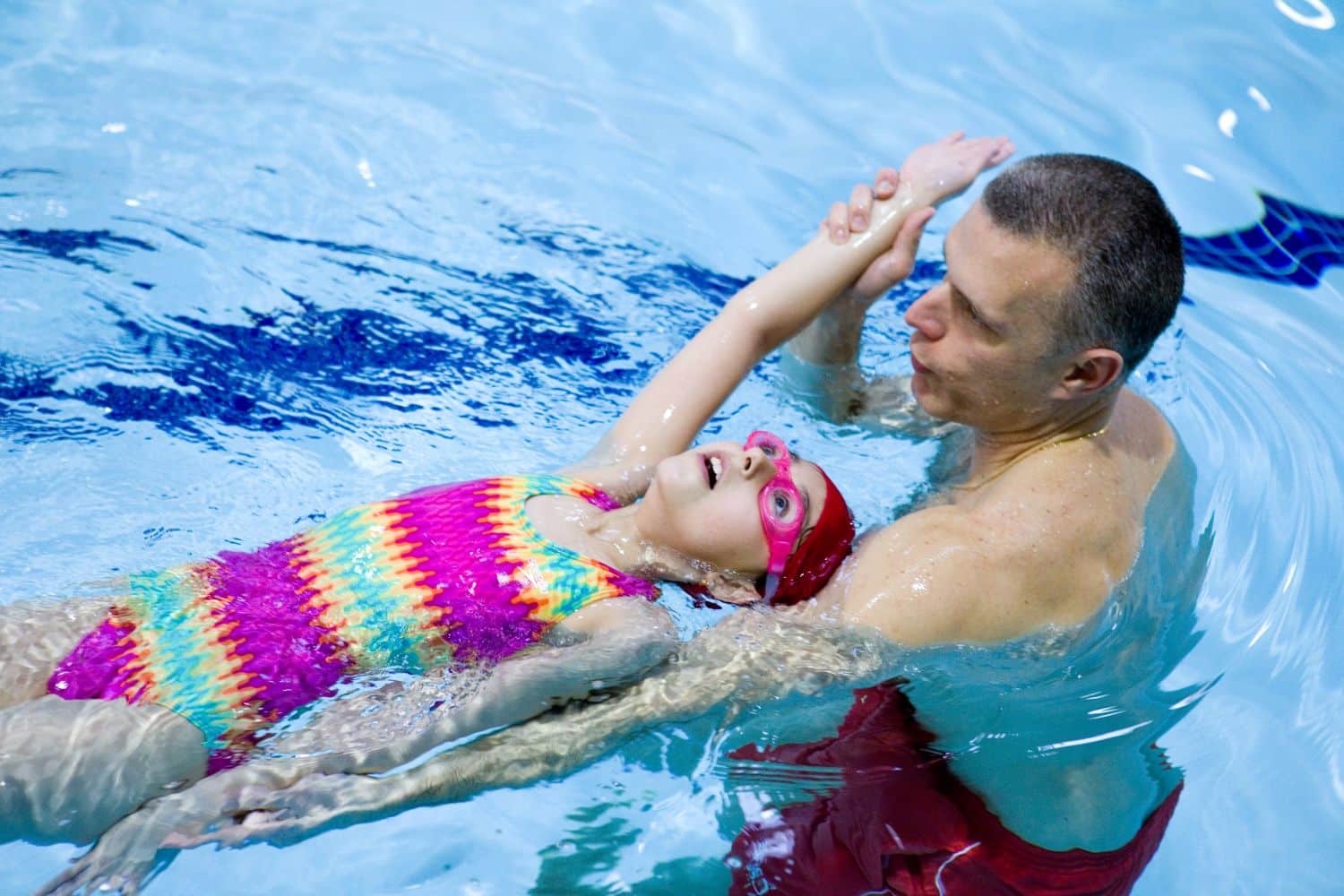
Backstroke Swimming for Beginners: The Easiest Stroke to Learn First
For many beginner swimmers, the hardest part of learning to swim isn’t moving through the water it’s breathing, fear, and fatigue. This is exactly why backstroke is often considered the easiest swimming stroke to learn first, especially for beginners who feel anxious or overwhelmed.
Backstroke allows swimmers to stay on their back with their face out of the water, making breathing natural and continuous. For children, teens, and adults alike, it builds confidence, balance, and body awareness before introducing more demanding strokes like freestyle or breaststroke.
If you’re just starting your swim journey, here’s why backstroke is such a powerful first step and how beginners can learn it the right way.
🌊 Why Backstroke Is Ideal for Beginners
Backstroke removes many of the barriers that make swimming feel intimidating at first.
Key reasons beginners love backstroke:
- You can breathe freely without turning your head
- Your face stays out of the water
- The body naturally floats on the back
- Movements are smooth and rhythmic
- It helps overcome fear of submersion
Because of this, backstroke is often the first stroke taught in learn-to-swim programs, especially for nervous swimmers or children building early water confidence.
🧠 Confidence Comes First — Speed Comes Later
Beginner swimmers don’t need speed right away. They need:
- Comfort
- Control
- Balance
- Trust in the water
Backstroke supports all of these. When swimmers feel supported by the water and are not struggling to breathe, their muscles relax and learning becomes much easier.
Many swimmers who struggle with freestyle at first find that mastering backstroke helps everything else fall into place.
Body Position: Floating Is the Foundation
The most important skill in backstroke is learning how to float comfortably on your back.
Beginner body position tips:
- Lie flat on the water, ears in the water
- Keep your chin neutral (not tucked, not lifted)
- Hips close to the surface
- Core gently engaged
- Eyes looking up, not toward the feet
When your body is balanced, the water does most of the work for you.
The Backstroke Kick: Small and Steady
Backstroke kicking should feel light and continuous — not forceful.
For beginners:
- Kick from the hips, not the knees
- Keep legs long and relaxed
- Small, quick kicks work better than big splashes
- Think of gently tapping the water, not pushing it
The kick helps maintain balance and forward motion, but it shouldn’t feel exhausting.
Backstroke Arm Movement Made Simple
Arm movement in backstroke follows a steady, alternating pattern.
Basic backstroke arm cycle:
- One arm lifts straight up from the water
- Thumb exits first, pinky enters first
- Arm reaches overhead
- Pulls gently through the water
- Opposite arm repeats
Beginners should focus on control and rhythm, not speed. Smooth, relaxed arms make backstroke feel effortless.
💨 Breathing: The Biggest Advantage of Backstroke
Unlike freestyle, backstroke allows swimmers to breathe naturally at any time. This is one of the biggest reasons it’s ideal for beginners.
Breathing tips:
- Breathe slowly and calmly
- Avoid holding your breath
- Match breathing to arm rhythm if helpful
Because breathing isn’t restricted, swimmers stay calmer and conserve energy — which leads to faster learning.
Common Beginner Mistakes (and How to Fix Them)
❌ Arching the back too much
➡️ Fix: Engage your core slightly and keep hips near the surface
❌ Kicking too hard
➡️ Fix: Reduce effort and focus on steady rhythm
❌ Arms crossing over the body
➡️ Fix: Keep arms aligned with shoulders
❌ Tensing the neck
➡️ Fix: Relax and let the water support your head
Small adjustments make a huge difference.
🧒 Why Backstroke Is Great for Kids
For children, backstroke builds trust and independence. It teaches:
- Floating skills
- Body control
- Calm breathing
- Confidence without fear
Many kids who are hesitant to put their face in the water feel empowered when they realize they can move and float on their back safely.
This confidence often carries over quickly into other strokes.
🧑🏫 Why Learning Backstroke With Instruction Helps
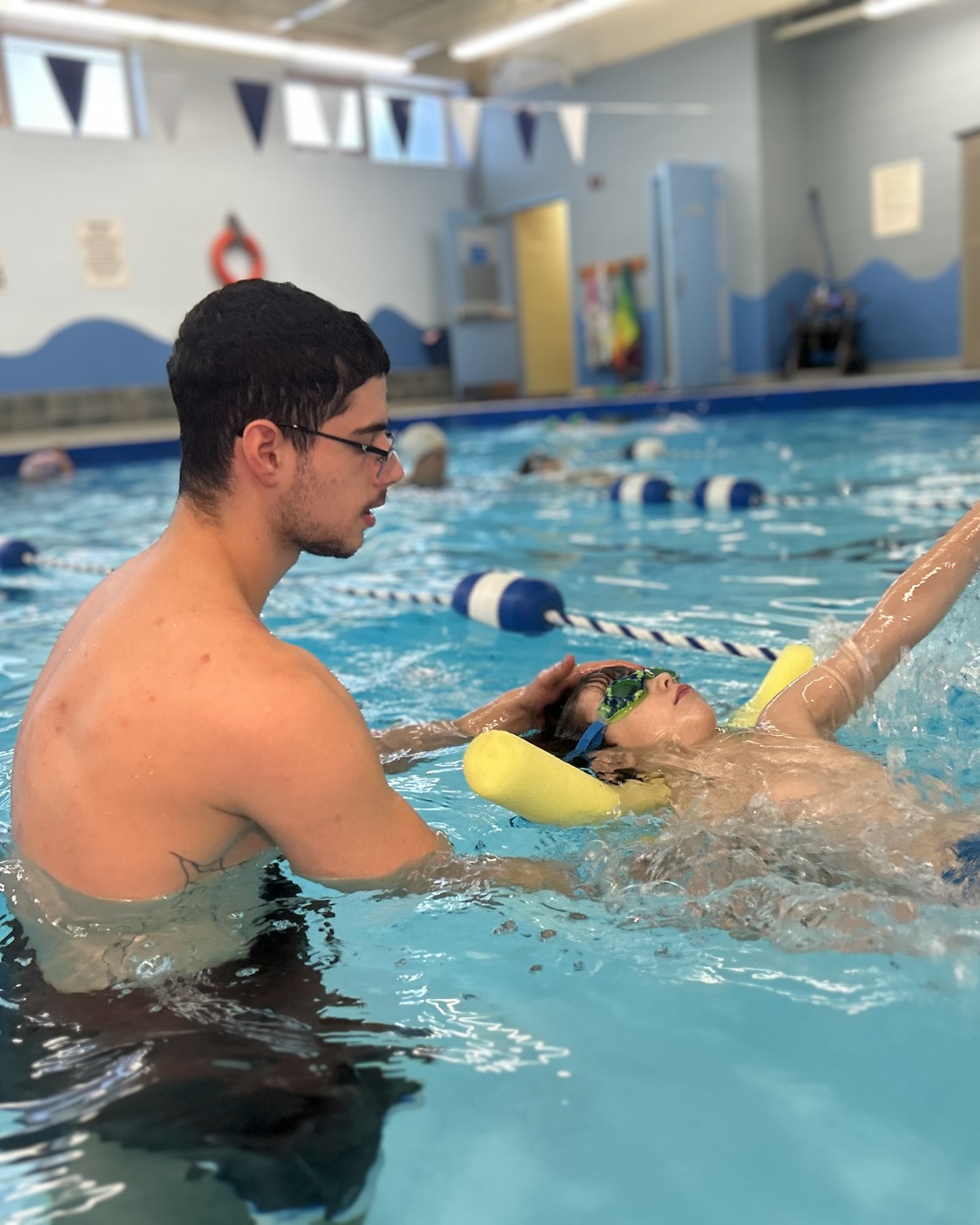
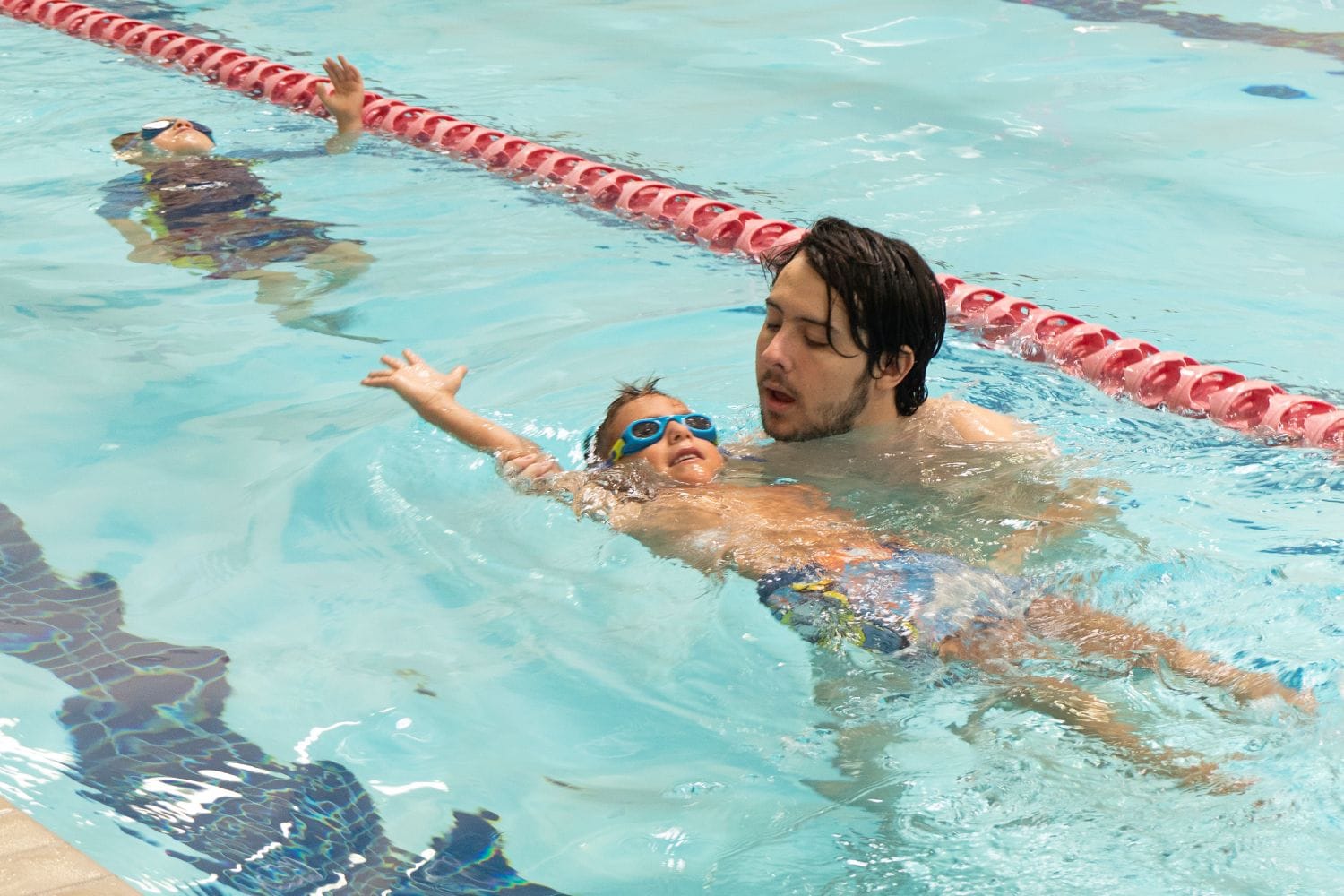
While backstroke looks simple, small technique issues can slow progress. Instructors help beginners:
- Find proper balance
- Improve body alignment
- Fix inefficient arm movements
- Build confidence safely
With guidance, beginners often progress in weeks instead of months.
🏁 Final Thoughts: Start Where Swimming Feels Easy
Backstroke proves that learning to swim doesn’t have to be stressful. By allowing natural breathing and gentle movement, it helps beginners feel successful right away.
If you’re new to swimming or helping a child learn starting with backstroke builds the confidence needed for long-term progress.
Swimming should feel calm, controlled, and enjoyable. Backstroke makes that possible from the very first lesson.
People also ask:
1️⃣ Why do I drift sideways when I swim backstroke?
Drifting usually happens when one arm pulls stronger than the other or when the kick is uneven. Small posture habits—like turning the head to one side—can also cause the body to veer off course.
2️⃣ How do beginners avoid getting water in their nose during backstroke?
Try breathing calmly and keeping your face relaxed. If water sneaks in, gently exhale through your nose. Many beginners also feel more comfortable wearing a nose clip until they build confidence.
3️⃣ What should I do if I feel dizzy when learning backstroke?
Some beginners feel dizzy from looking upward or from unfamiliar body position. Take short breaks, focus your eyes on a fixed point (like the ceiling), and keep sessions brief until your body adapts.
4️⃣ Is it okay to use a floatation aid while learning backstroke?
Yes—used correctly, floatation aids can help beginners feel safe while practicing body position and kicking. The goal is to gradually rely on them less as confidence and balance improve.
5️⃣ How can beginners learn backstroke without bumping into the wall?
Learning pool awareness takes time. Beginners can start close to a lane line or practice with an instructor’s cues. As skills improve, counting strokes and using backstroke flags help swimmers learn when they’re nearing the wall.
Categories:
Latest posts:
- Elementary Backstroke vs Competitive Backstroke: What’s the Difference?
- Backstroke Swimming for Beginners: The Easiest Stroke to Learn First
- Freestyle Swimming for Beginners: How to Swim Faster With Less Effort
- Chlorine and Kids: How Pool Water Affects Skin, Hair, and Eyes (And What Parents Can Do)
- Two Pools, One Swim School: How Separate Baby & Kids Pools Improve Learning in Midtown Toronto
LOCATIONS & SCHEDULES8 LOCATIONS IN THE GREATER TORONTO AREA TO SERVE YOU BETTER!
BEACHES
181 Broadview Ave, Toronto, ON M4M 2G3, Canada
Tue & Thu: 5:00PM – 9:00PM
Wed: 5:30PM – 8:30PM
Sat – Sun: 9:30AM – 2:30PM
Mon & Fri: Closed
DOWNTOWN
64 Baldwin St, Toronto, ON M5T 1L4, Canada
Mon – Thu: 4:30PM – 9:00PM
Sat – Sun: 9:30AM – 4:45PM
Tue & Fri: Closed
JUNCTION
315 Osler St, Toronto, ON M6N 2Z4, Canada
Mon – Wed: 4:30PM – 9:00PM
Fri: 4:30PM – 7:30PM
Sat – Sun: 9:30AM – 4:45PM
Thu: Closed
MARKHAM
205 Clayton Dr, Markham, ON L3R 7P3, Canada
Tue-Fri: 4:00PM – 9:00PM
Thu: 8:00AM-12:00PM
Thu: 4:00PM – 9:00PM
Sat – Sun: 9:00AM – 3:30PM
Mon: Closed
MIDTOWN
450 Blythwood Rd, Toronto, ON M4N 1A9
Mon – Fri: 4:30PM – 7:30PM
Sat : 9:30AM – 4:45PM
Sun: 2:15PM – 6:00PM
NORTH YORK
7026 Bathurst St, Thornhill, ON L4J 8K3, Canada
Mon – Wed: 4:30PM – 9:00PM
Sun: 9:30AM – 2:30PM
Thu – Sat: Closed
THORNHILL
8403 Yonge St, Thornhill, ON L3T 6R2, Canada
Mon – Fri: 4:00PM – 9:00PM
Sat – Sun: 9:30AM – 3:30PM
WOODBRIDGE
643 Chrislea Rd #2, Woodbridge, ON L4L 8A3, Canada
Mon – Fri: 4:00PM – 8:30PM
Sat : 9:30AM – 5:00PM
Sun: 9:30AM – 2:00PM
Felix’s Swim Schools is a leading swimming facility proudly serving Toronto, Vaughan, Richmond Hill, Concord, York, Scarborough, East York, and Etobicoke.


