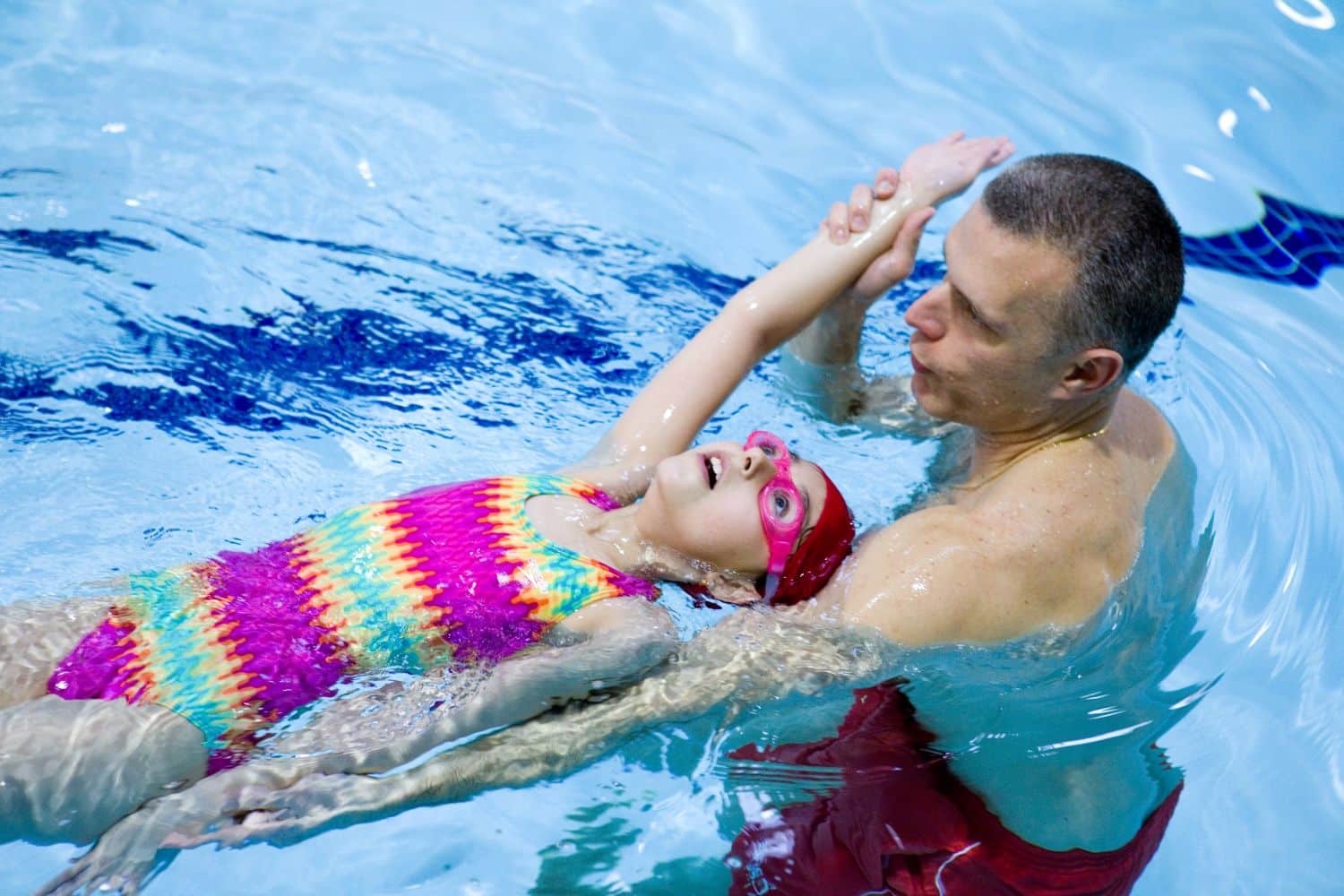
Elementary Backstroke vs Competitive Backstroke: What’s the Difference?
If you’re new to swimming lessons or enrolling your child for the first time you may hear two similar-sounding terms: elementary backstroke and competitive backstroke. While both are performed on the back, they serve very different purposes and are taught at different stages of a swimmer’s development.
Understanding the difference helps parents know what their child is learning, why certain strokes are taught first, and how early skills build toward stronger swimming later on. This guide breaks it down in a simple, clear way — no swim jargon required.

What Is Elementary Backstroke?
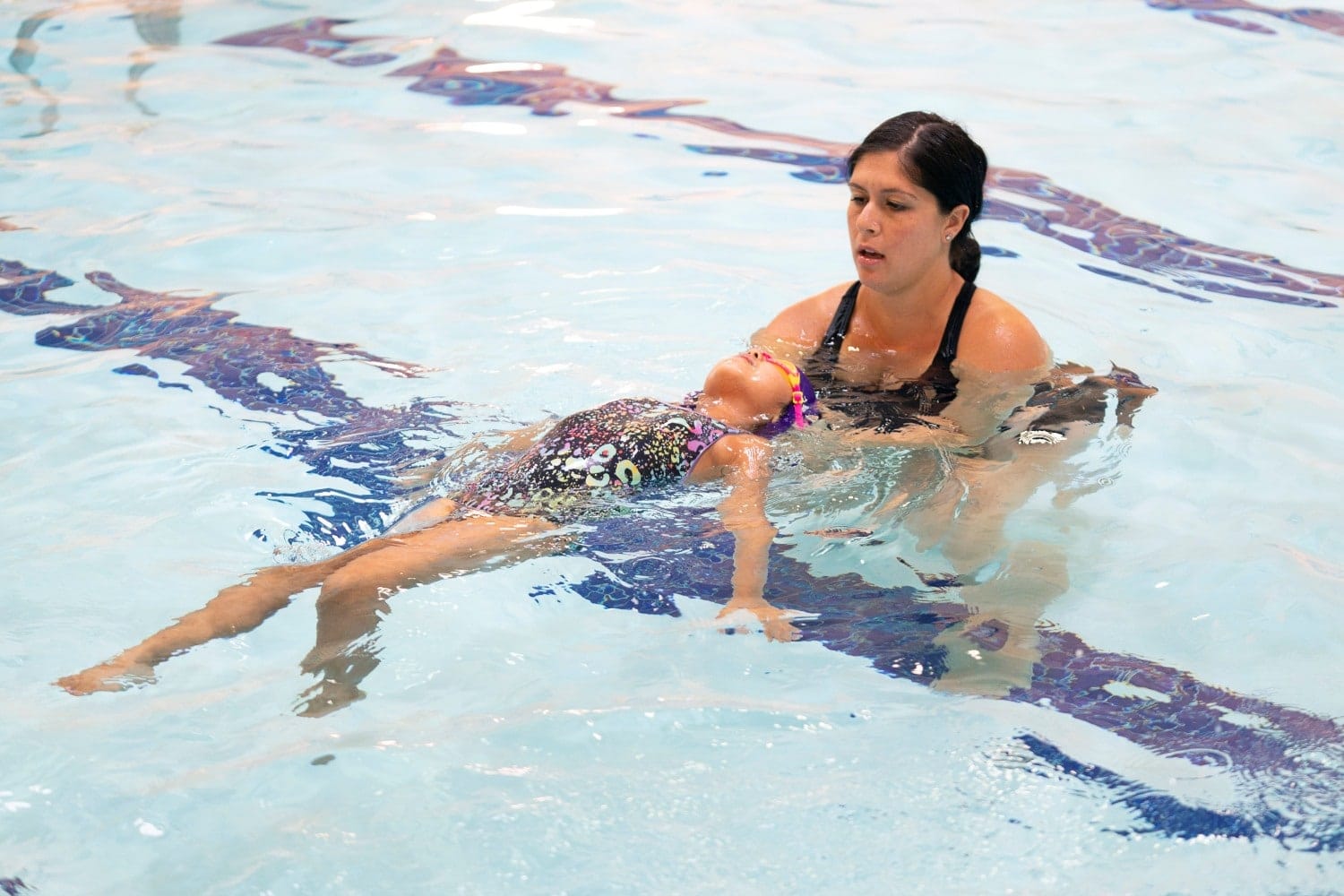
Elementary backstroke is a foundational swimming skill designed for beginners. It focuses on comfort, floating, and control rather than speed or competition.
This stroke is often introduced early in learn-to-swim programs, especially for children and nervous swimmers, because it keeps the face out of the water and allows for natural breathing.
Key features of elementary backstroke:
- Performed on the back
- Face stays above the water
- Slow, controlled movements
- Emphasis on floating and balance
- Simple arm and leg actions
Elementary backstroke is sometimes described as a “resting stroke” because it allows swimmers to stay afloat calmly and safely.
Why Elementary Backstroke Is Taught First
For beginners, swimming confidence matters more than technique. Elementary backstroke helps swimmers:
- Learn to float independently
- Develop trust in the water
- Practice calm breathing
- Improve body awareness
- Feel safe without submerging the face
Many children who are hesitant to put their face in the water thrive when learning elementary backstroke first. Once confidence is established, transitioning to other strokes becomes much easier.
How Elementary Backstroke Looks in Practice
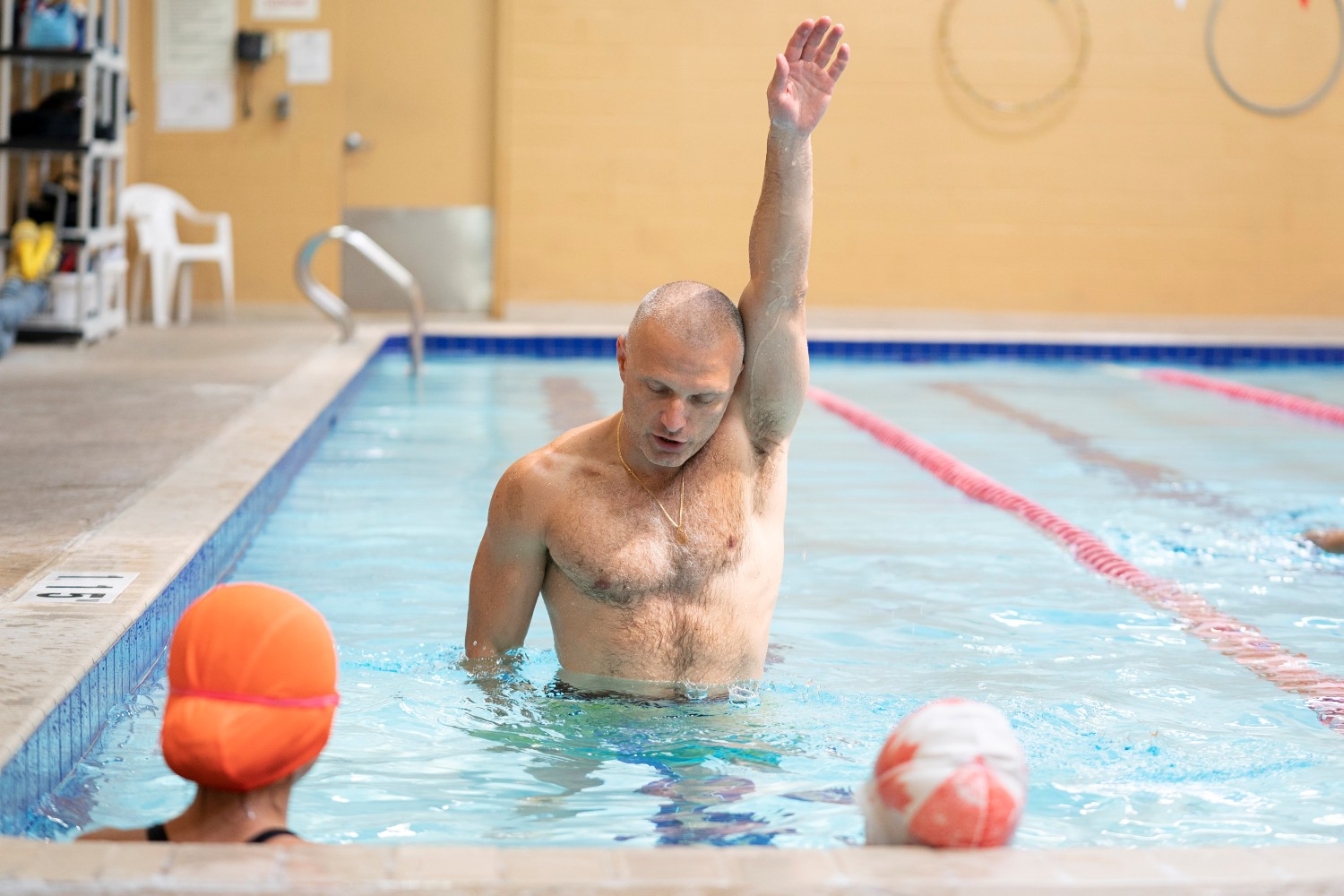
Elementary backstroke uses gentle, symmetrical movements.
Basic movement pattern:
- Arms move together slowly, opening and closing
- Legs perform a relaxed frog-style kick
- Body remains flat and supported by the water
- Breathing stays relaxed and continuous
The goal isn’t distance or speed — it’s control and comfort.
What Is Competitive Backstroke?
Competitive backstroke is one of the four official swimming strokes used in races. It is faster, more technical, and physically demanding.
This stroke is introduced after swimmers have mastered floating, breathing, and basic coordination usually later in swim education or once children show readiness for advanced technique.
Key features of competitive backstroke:
- Alternating arm movements
- Continuous flutter kick
- Strong body rotation
- Streamlined posture
- Focus on speed and efficiency
Unlike elementary backstroke, competitive backstroke requires precise timing and coordination.
⚡ How Competitive Backstroke Feels Different
Competitive backstroke demands:
- Stronger core engagement
- Shoulder mobility and endurance
- Consistent kicking rhythm
- Spatial awareness (knowing where walls are)
Swimmers also learn to:
- Rotate their body with each stroke
- Maintain alignment while moving faster
- Use backstroke flags to judge distance to the wall
This stroke is typically taught only after swimmers feel confident and comfortable in the water.
The Main Differences at a Glance
| Elementary Backstroke | Competitive Backstroke |
|---|---|
| Beginner-level stroke | Advanced technique |
| Focus on floating | Focus on speed |
| Slow, symmetrical movements | Alternating arm motion |
| Gentle kick | Fast flutter kick |
| Used for safety and comfort | Used for racing and fitness |
Both strokes are valuable — just at different stages.
🧒 Which One Should Kids Learn?
For most children, elementary backstroke comes first. It builds essential skills that prepare swimmers for all other strokes, including competitive backstroke.
Once a child:
- Floats confidently
- Breathes calmly
- Moves comfortably through the water
- Follows basic instruction
…they’re usually ready to begin learning competitive backstroke technique.
Skipping the elementary phase can make swimming feel stressful or overwhelming, especially for younger swimmers.
🧑🏫 Why the Progression Matters
Swim instruction works best when skills are layered gradually. Elementary backstroke isn’t “less important” — it’s the foundation.
Swimmers who master elementary backstroke often:
- Learn competitive strokes faster
- Feel more confident in deep water
- Have better balance and posture
- Experience less fear during lessons
This progression supports long-term success in swimming.
🏁 Final Thoughts: Different Strokes, Different Goals
Elementary backstroke and competitive backstroke are not interchangeable and that’s a good thing. Each serves a specific purpose in a swimmer’s journey.
Elementary backstroke builds confidence, safety, and comfort. Competitive backstroke builds speed, strength, and efficiency.
By learning both at the right time, swimmers gain the skills they need to enjoy the water — whether for safety, fitness, or competition.
People also ask:
1️⃣ Is elementary backstroke “real backstroke,” or just a beginner skill?
Elementary backstroke is a real swimming skill, but it’s designed for comfort and control rather than speed. It’s often taught early because it helps swimmers float confidently and stay calm in the water.
2️⃣ Why do some swim programs teach elementary backstroke before freestyle?
Because it keeps the swimmer’s face above water and makes breathing easy. This helps beginners relax and build trust in the water before learning strokes that require face-in breathing.
3️⃣ When should a child transition from elementary backstroke to competitive backstroke?
A good time to transition is when a child can float steadily, move confidently on their back, and follow basic technique cues. Instructors usually introduce competitive backstroke once coordination and endurance begin to develop.
4️⃣ Does competitive backstroke require strong kicking to work well?
Yes, competitive backstroke relies heavily on a steady flutter kick to keep the hips up and maintain speed. Beginners can learn the arm motion first, but the kick becomes more important as swimmers progress.
5️⃣ Can adults learn elementary backstroke, or is it only for kids?
Adults can absolutely learn elementary backstroke. Many adult beginners find it helpful because it improves floating, breathing comfort, and confidence—especially if they feel anxious putting their face in the water.
Categories:
Latest posts:
- Elementary Backstroke vs Competitive Backstroke: What’s the Difference?
- Backstroke Swimming for Beginners: The Easiest Stroke to Learn First
- Freestyle Swimming for Beginners: How to Swim Faster With Less Effort
- Chlorine and Kids: How Pool Water Affects Skin, Hair, and Eyes (And What Parents Can Do)
- Two Pools, One Swim School: How Separate Baby & Kids Pools Improve Learning in Midtown Toronto
LOCATIONS & SCHEDULES8 LOCATIONS IN THE GREATER TORONTO AREA TO SERVE YOU BETTER!
BEACHES
181 Broadview Ave, Toronto, ON M4M 2G3, Canada
Tue & Thu: 5:00PM – 9:00PM
Wed: 5:30PM – 8:30PM
Sat – Sun: 9:30AM – 2:30PM
Mon & Fri: Closed
DOWNTOWN
64 Baldwin St, Toronto, ON M5T 1L4, Canada
Mon – Thu: 4:30PM – 9:00PM
Sat – Sun: 9:30AM – 4:45PM
Tue & Fri: Closed
JUNCTION
315 Osler St, Toronto, ON M6N 2Z4, Canada
Mon – Wed: 4:30PM – 9:00PM
Fri: 4:30PM – 7:30PM
Sat – Sun: 9:30AM – 4:45PM
Thu: Closed
MARKHAM
205 Clayton Dr, Markham, ON L3R 7P3, Canada
Tue-Fri: 4:00PM – 9:00PM
Thu: 8:00AM-12:00PM
Thu: 4:00PM – 9:00PM
Sat – Sun: 9:00AM – 3:30PM
Mon: Closed
MIDTOWN
450 Blythwood Rd, Toronto, ON M4N 1A9
Mon – Fri: 4:30PM – 7:30PM
Sat : 9:30AM – 4:45PM
Sun: 2:15PM – 6:00PM
NORTH YORK
7026 Bathurst St, Thornhill, ON L4J 8K3, Canada
Mon – Wed: 4:30PM – 9:00PM
Sun: 9:30AM – 2:30PM
Thu – Sat: Closed
THORNHILL
8403 Yonge St, Thornhill, ON L3T 6R2, Canada
Mon – Fri: 4:00PM – 9:00PM
Sat – Sun: 9:30AM – 3:30PM
WOODBRIDGE
643 Chrislea Rd #2, Woodbridge, ON L4L 8A3, Canada
Mon – Fri: 4:00PM – 8:30PM
Sat : 9:30AM – 5:00PM
Sun: 9:30AM – 2:00PM
Felix’s Swim Schools is a leading swimming facility proudly serving Toronto, Vaughan, Richmond Hill, Concord, York, Scarborough, East York, and Etobicoke.


